The Price of Staying Capable: Commonalities Across Bryan Johnson’s ‘Immortals’ and The Longevity Approach in Singapore

Following Bryan Johnson from self-experiment to Blueprint to Immortals, and what it revealed while building Elyx

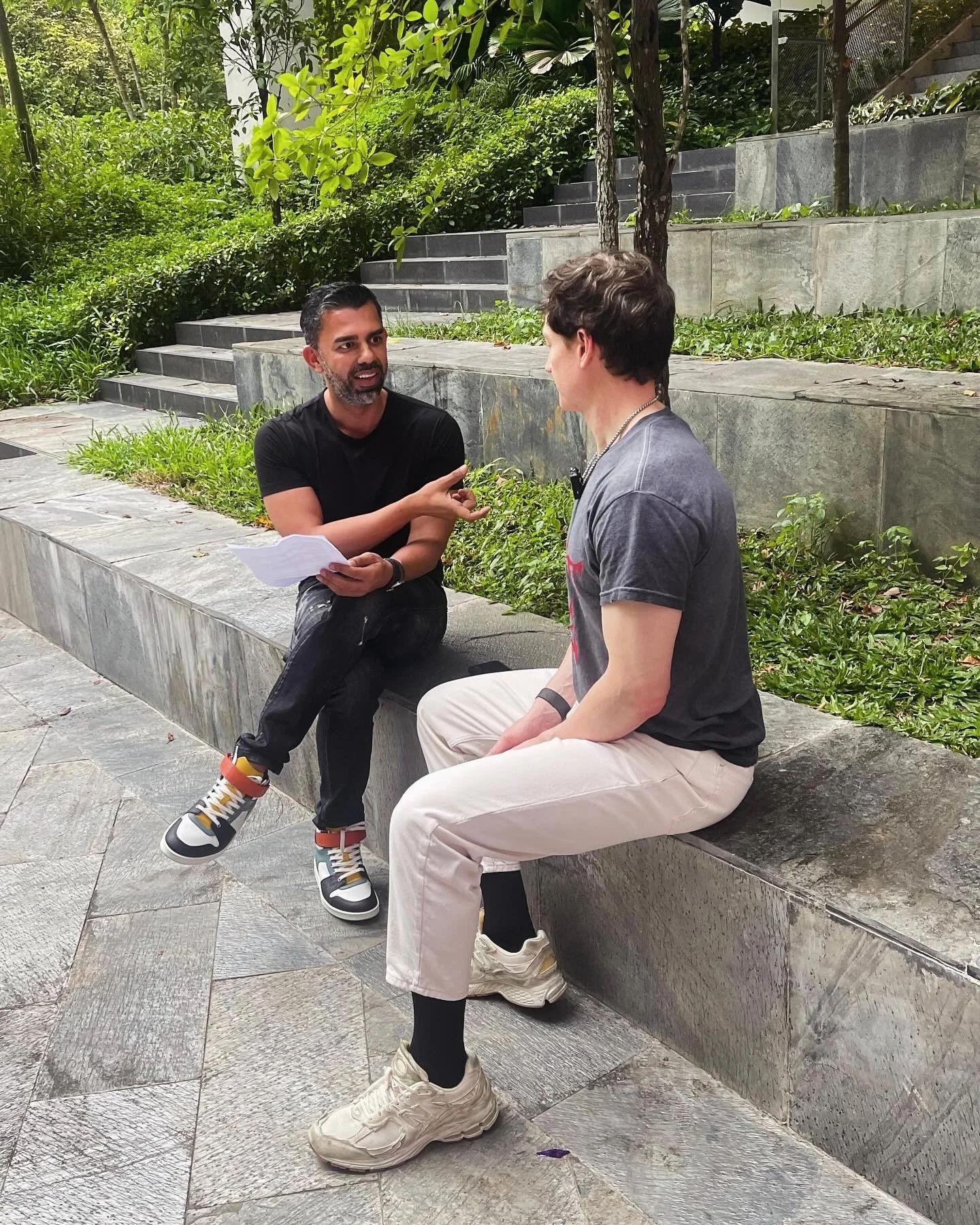
Varun Panjwani, Commercial Director at Elyx, in conversation with Bryan Johnson, whose Immortals program mirrors many of the healthspan principles Elyx was independently built upon.

I first met Bryan Johnson in early 2025. Blueprint was already underway, but it had not yet become a mainstream reference point outside technology circles. The public narrative around him was already loud: a person treating his body as a measurable system, tracking an unusually large set of biomarkers, standardizing meals, structuring sleep, and making routine so precise that it looked, to many observers, looked like an act of defiance against normal living.

In our meetings and in my interview with him that February, the emphasis felt quieter and more practical. He did not frame the work as a philosophical crusade for immortality. He framed it as a way to reduce uncertainty. His problem statement was not “how do I live forever” but “how do I make fewer health decisions in ambiguity.”

Over the next year, the arc became unusually clear. What began as a self-experiment evolved into Blueprint as a documented protocol, and then into Immortals, a program where others could operate inside the same decision framework supported by a dedicated team and an always available analysis layer. When a personal routine becomes a repeatable system, and then becomes a product, the market learns something. It learns what is scarce, what is valuable, and what people are actually paying for.

Watching that progression unfold has been instructive while we build Elyx around a related but more practical question: not how one individual can optimize every variable, but how a system can simplify those variables for people living demanding professional lives.

Once health becomes a system with a price attached, the conversation changes. The question stops being whether the approach looks extreme but becomes what is actually being purchased.


Health and happiness, and the discomfort with visible structure

In most situations, health and happiness are assumed to move together. When someone lives with fatigue, chronic illness, pain, or physical limitation, we expect that burden to spill into mood, patience, social energy, and outlook. When someone appears consistently healthy, sleeping regularly, moving often, eating with discipline, we assume broader stability around them. Routine and health are taken as proxies for life being in order.

So why does the assumption reverse when health becomes highly structured?

The discomfort is rarely about health itself. It is about visible structure. Numbers, tracking, schedules, and protocols look psychologically expensive from the outside. They get interpreted as obsession, and obsession is assumed to reduce happiness.

Yet most people already carry a large cognitive load around health. They decide whether tiredness is acceptable, whether hunger is real or habitual, whether a symptom matters, whether to push through or recover. Because these decisions happen informally, they feel natural. When the same complexity is organized into a system, it suddenly looks restrictive.

A personal trainer makes the contrast obvious. Good training is not “go hard.” It is a dense series of decisions: load selection, technique, range of motion, tempo, progression, deload timing, injury risk, and the difference between soreness and strain. Most people hire a trainer not because they want more complexity but because they want less. The trainer absorbs the decision burden so the individual can execute confidently.

Well-designed products follow the same principle. Apple’s packaging and interfaces feel simple because extraordinary effort has already happened behind the scenes. Complexity did not disappear. It was resolved in advance and hidden so the user experiences obviousness.

A well-run health protocol aims for that same outcome. It takes chaos and turns it into a small set of actions that feel clear. The person does not become more obsessive. They become less responsible for interpreting every signal.

Longevity as functional time, not abstract years

Global average life expectancy has more than doubled since 1900, rising from about 32 years to around 73 years by 2023. The statistic is striking, but it still understates what people actually feel. The experience of aging has changed not only because more people live longer, but because more people remain capable for longer.

Modern medicine repeatedly extended participation rather than just survival. Vision restoration and joint repair are not merely clinical wins. They preserve independence. They preserve ease. They preserve the ability to do ordinary things without planning around limitation.

This is why debates about immortality often miss the point. Most people are not trying to extend life indefinitely. They are trying to avoid the slow shrinking of routine: travel becoming tiring, stairs becoming strategic, social life becoming effortful, work requiring increasingly long recovery.

Longevity, in practice, is best understood as functional time. It is the period during which ordinary life remains ordinary.


What the price actually buys: A team that owns accountability

A one million-dollar longevity program invites an assumption that the interventions must be exotic. In reality, many components are familiar: bloodwork, imaging, training guidance, nutrition planning, sleep optimization, recovery work, and supportive therapies.

The price is rarely explained by novelty. It is explained by responsibility.

What is being purchased is a team that owns accountability for coherence across an entire ecosystem of decisions. The team is not simply providing information. It is purchasing certainty and follow through.

That means interpreting bloodwork trends longitudinally rather than reacting to single values. It means selecting supplements based on measurable need rather than stacking compounds because they are popular, including the discipline of not over-supplementing. It means matching training intensity to recovery capacity rather than assuming intensity equals progress. It means getting nutrition mathematically consistent with goals, including the unglamorous reality that more protein does not help if the person remains in a calorie surplus with low food quality. It means introducing fine tuning therapies only after foundational markers are stable and only when the tradeoffs are understood.

Most people know the basics. The challenge is the interaction between the basics.

More effort can worsen recovery.
More supplementation can create noise.
More protein can fail if calories are mismanaged.
More cold exposure can backfire if mistimed.

The team exists to make those interactions coherent and to ensure action actually follows insight.

If there is a single unspoken purchase in elite longevity, it is accountability. Someone else holds the plan, tracks the drift, and pushes the individual to respond when the easiest choice would be to ignore the signal.


Sleep, success culture, and the quality tradeoff

If there is one behavior that reveals how modern culture fights biology, it is sleep.

Late nights and powering through are often treated as a badge of honor. In some environments they are treated as a requirement for success. There are moments where this is unavoidable. The tradeoff appears when endurance replaces clarity.

Remaining awake for extended periods produces measurable cognitive impairment comparable to moderate alcohol intoxication. More importantly, work quality declines quietly. Decisions become reactive rather than deliberate. Communication becomes less precise. Time spent increases while value produced decreases.

Good sleep changes the economics of effort. Several focused hours can outperform an entire exhausted day. Flow states emerge when mental clarity exists. In those moments decisions are faster, actions cleaner, and output higher.

This matters more as AI tools automate repetitive analysis and administrative work. As low judgement, high time tasks disappear, human value shifts toward judgment. The competitive advantage becomes clarity of thought, not tolerance of fatigue.

Sleep therefore becomes a performance multiplier rather than a recovery luxury.


Listening to the body, and why testing changes the equation

Advice to listen to the body assumes reliable signals. Modern life distorts them. Stimulation masks fatigue. Constant food availability alters hunger cues. Stress becomes background noise.

Testing extends perception beyond sensation. Subtle shifts in metabolic markers, inflammation, or recovery can be detected before symptoms appear. What feels like aging or a bad week may be measurable drift.

This enables correction while still reversible. The benefit of data driven care is timing.

Programs therefore require commitment. Measurement only works when acted upon. Structure retrains intuition by pairing sensation with evidence.


Wearables, AI, metabolic drugs, and the mechanics of anticipation

Technology’s role in longevity is becoming increasingly practical. Wearables such as Apple Watch, Oura, and Whoop capture patterns humans misremember: sleep timing, recovery trends, activity load. Their purpose is direction rather than daily judgment.

AI converts these signals into interpretation. Patterns surface, noise disappears, and experts focus on decisions rather than data collection. Continuous glucose monitoring reveals meal-level responses. Predictive models detect drift earlier.

Alongside measurement, pharmacology is evolving rapidly. GLP-1 receptor agonists and newer GLP-1 plus GIP dual agonists are changing metabolic medicine. Beyond weight loss, they alter appetite signaling, glucose stability, and energy regulation. Their presence creates a new requirement for oversight. Used casually, they can reduce lean mass or disrupt training adaptation. Used within a structured program, they can stabilize metabolic health and allow more precise optimization of nutrition and training.

These developments together suggest a shift toward anticipation. If detection and intervention improve fast enough, decline can be delayed continuously. The concept often described as escape velocity remains theoretical, but the direction is clear. Earlier detection, pharmacological support when appropriate, and continuous behavioral adjustment keep physiology closer to optimal range for longer.

Technology does not replace real-world behavior. It makes timing precise.


Therapies: Evidence, margins, and motivation

Supportive therapies sit in a category that is often misunderstood because they are evaluated only through a clinical lens, when their real contribution is partly physiological and partly behavioral.

Their value changes dramatically depending on whether fundamentals are already in place. If sleep timing is inconsistent, nutrition incoherent, and recovery mismatched to training load, no therapy meaningfully alters trajectory. But once those variables stabilize, certain therapies reliably support the system.

Sauna is the clearest example. Regular heat exposure has repeatedly shown associations with improved cardiovascular outcomes and vascular function. More importantly in practice, it almost never interferes with foundational habits. It tends to support recovery, relaxation, and sleep quality in a way that reinforces the rest of the program. In structured care it becomes less an optional add-on and more a supportive extension of baseline physiology.

Other modalities behave differently. Cold exposure, for example, may have context-dependent physiological effects and can even blunt certain training adaptations if mistimed. Yet the immediate psychological response is consistent. People feel alert, uplifted, and mentally reset. That emotional reinforcement matters more than it appears. Long term health depends on consistency, and consistency depends partly on whether the routine feels rewarding.

Contrast therapy occupies a similar middle ground. Alternating hot and cold creates circulation effects but also creates a deliberate pause in the week. Many people treat it as recovery, but in practice it often functions as structured decompression. Hyperbaric oxygen therapy sits even further along the spectrum, useful in specific recovery contexts but less central to everyday health.

This distinction matters. Some therapies improve biology directly. Others improve the likelihood that someone continues doing the fundamentals long enough for the fundamentals to work. A marginal physiological effect can still have a large real-world outcome if it improves adherence.

Fundamentals determine direction.

Therapies often determine whether the direction is maintained.


The parallel while building Elyx

Following Bryan’s progression clarified a recurring pattern we repeatedly observed while building Elyx. People rarely fail because they lack information. They fail because information arrives fragmented and unprioritized.

A person may receive excellent advice from multiple professionals, each correct within their domain yet disconnected from the others. Medical testing produces insights but no execution. Training programs advance fitness but ignore recovery markers. Nutrition plans optimize macros but not blood markers. The burden of integration falls on the individual, and integration becomes the actual difficulty.

What a coordinated system changes is not the sophistication of the advice but the continuity of the plan. Decisions are sequenced rather than layered. Adjustments occur within context rather than in isolation. The individual stops being the central processor.

In practice this does not add structure to life. It removes negotiation from it. The person receives fewer decisions, not more, because the interpretation work has already been resolved upstream.


The question beyond immortality

The debate often centers on living forever. The practical concern is maintaining capability.

Across professions complexity is routinely redistributed rather than carried alone. An elite athlete does not design their own annual training cycle while competing at the highest level. A coach and performance staff manage load, recovery, and progression so the athlete can focus on execution. A fund manager responsible for billions does not spend the day coordinating travel, meetings, and logistics; a chief of staff structures time so decisions receive attention instead of administration. A film actor arrives on set to perform because wardrobe, scheduling, preparation, and production coordination have already been solved by the surrounding team.

Health is rarely treated the same way, even though it requires equal continuity across domains. The modern individual often acts as their own physician, nutritionist, trainer, scheduler, and analyst simultaneously, which makes the discipline feel heavier than it actually is.

If complexity could be translated into a clear plan with support to execute it, most people would accept it naturally. Immortals makes that question explicit. Not infinite life, but fewer negotiations with the body. A system designed to preserve the ease of living rather than merely extend its duration.

Previous
Previous

Stop Romanticizing Death